Sameer Khan
How to Get Your Products on ChatGPT Shopping in 2026
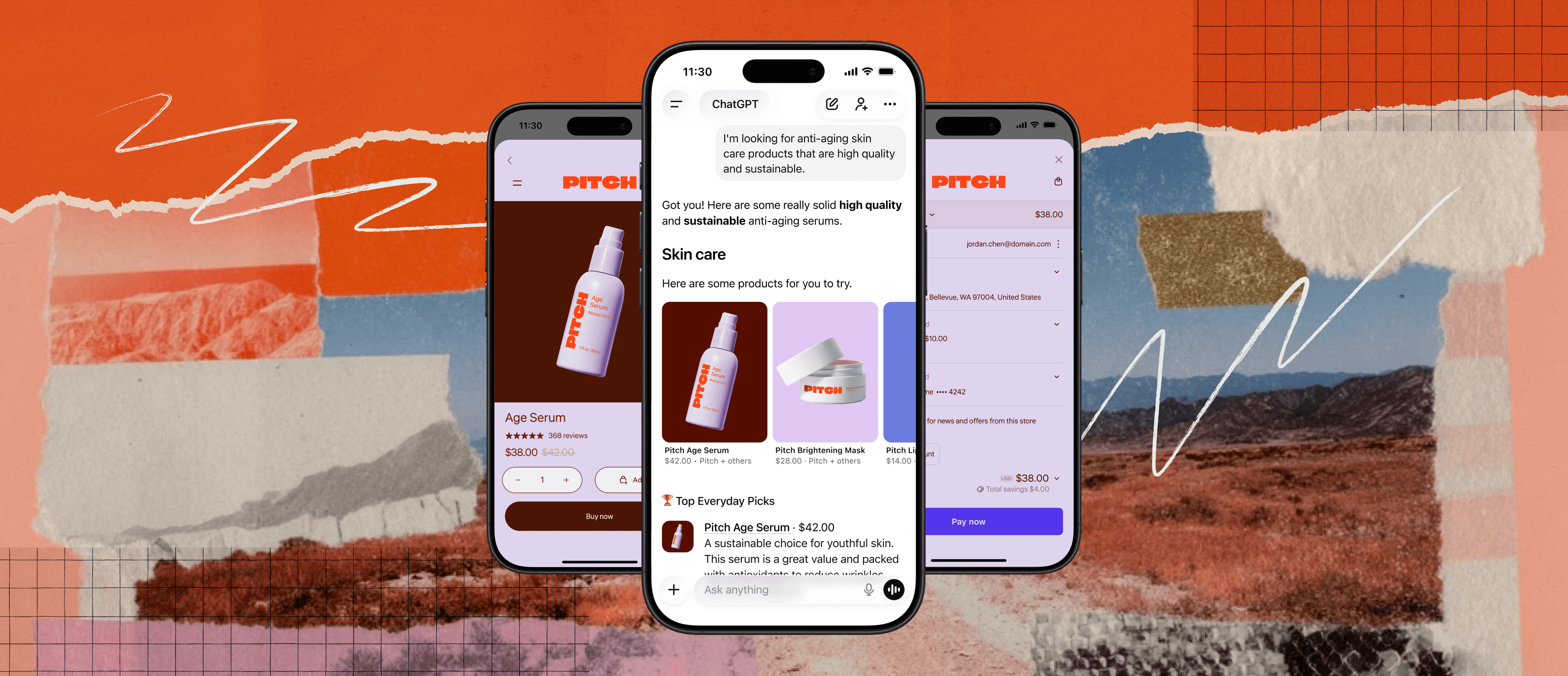
ChatGPT now processes 50 million shopping queries every day across 700 million weekly users. It's the 5th most visited website globally — and it's rapidly becoming a primary shopping channel. Brands that show up in ChatGPT Shopping are capturing high-converting traffic that their competitors can't even see.
This guide covers exactly how ChatGPT Shopping works, how to get your products listed, and what you need to optimize to get recommended.
How ChatGPT Shopping Works in 2026
ChatGPT Shopping has evolved significantly. Here's the current state:
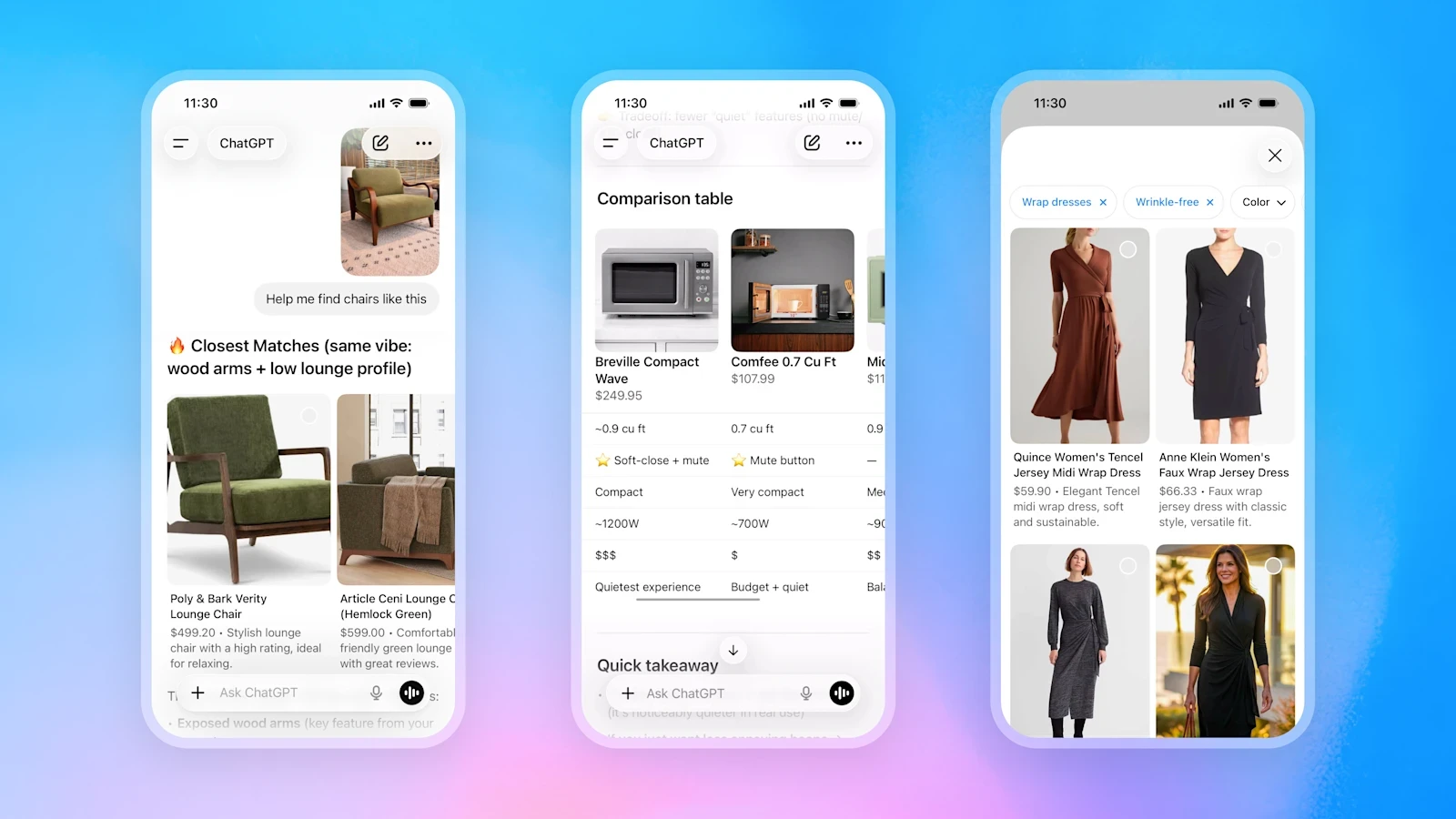
The shopping experience: Users describe what they want conversationally or upload images. ChatGPT returns product carousels with images, prices, and buy links. Users can compare products side-by-side, ask follow-up questions, and refine their search through conversation.
Checkout: OpenAI pivoted away from Instant Checkout in March 2026. Shopping now uses an in-app browser that takes users to the merchant's own checkout page. This means 0% transaction fees — a major shift from the earlier 4% fee model.
Results are organic: OpenAI states that product recommendations are unsponsored and ranked by relevance, price, inventory, and quality. ChatGPT Ads exist separately but don't influence organic product recommendations.
Where ChatGPT Gets Its Product Data
Understanding the data sources is critical for optimization:
83% of product carousel items come from Google Shopping (confirmed by Peec AI / Search Engine Land research). ChatGPT fires shopping sub-queries to Google Shopping, then assembles results. This means your Google Merchant Center listing is your #1 lever.
Beyond Google Shopping, ChatGPT also pulls from:
OpenAI's own product feed index — Direct feed submissions via chatgpt.com/merchants
Product pages with structured data — Schema.org Product markup
Third-party review sites — Wirecutter, G2, Trustpilot
Reddit and community forums — OpenAI explicitly prioritizes Reddit as a trusted source
Product titles are the #1 signal for carousel inclusion. Use full, descriptive, natural-language titles — not abbreviated keyword strings.
Step 1: Shopify Merchants — You're Already In
As of late March 2026, Shopify merchants are discoverable in ChatGPT by default via Agentic Storefronts. No app install, no integration work, no opt-in required. Products flow through Shopify Catalog automatically. Over 1 million Shopify merchants are eligible.
Agentic Storefronts also cover Microsoft Copilot, Google AI Mode, and Gemini from the same Shopify Admin. If you're on Shopify, verify your products are appearing by searching ChatGPT for items in your category.
Step 2: Non-Shopify — Submit Your Product Feed
For non-Shopify merchants, register at chatgpt.com/merchants:
Submit business details for verification
Receive SFTP credentials upon approval
Build a sample feed (~100 products) with required fields: feed_id, account_id, product id, variant id, variant title
Format as .jsonl.gz, .csv.gz, or Parquet (Parquet recommended for 100K+ SKUs)
Push to SFTP endpoint for schema validation
Deploy full catalog; automate refreshes up to every 15 minutes
Set is_eligible_search=true for discoverability
Step 3: Optimize Your Google Merchant Center
Since 83% of ChatGPT product carousels come from Google Shopping, your Merchant Center listing is critical. Ensure:
Complete product data — Title, description, price, availability, images, GTIN/UPC, brand
Natural-language titles — "Women's Waterproof Trail Running Shoes — Lightweight, Breathable, Size 10" beats "Running Shoes - Blue - 10"
Real-time inventory — Nothing damages AI trust like recommending out-of-stock products
Competitive pricing — AI assistants compare prices across retailers in real-time
Step 4: Enrich Product Attributes
Basic data gets you indexed. Enriched attributes get you recommended. ChatGPT evaluates popularity score, return rate, review count, and average rating when ranking products. Beyond the basics:
Use-case descriptions that match how shoppers actually ask ("best moisturizer for dry skin under $40")
Benefit statements instead of raw features
User segmentation — "designed for beginners," "professional-grade"
Compatibility info — What works with your product?
ChatGPT achieves 64% product-match accuracy for shopping queries vs. 37% for standard queries — it's getting very good at matching products to intent when you give it the data.
The Amazon Advantage for DTC Brands
Amazon blocked OpenAI's crawlers in November 2025, making 600 million product listings invisible to ChatGPT Shopping. Amazon's motivation: protecting its $56B/year ad business.
The impact is massive: 40% of US e-commerce is dark to ChatGPT. Walmart now gets 20% of its referral clicks from ChatGPT (up 15% month-over-month), while Amazon referral traffic dropped 18%.
For DTC brands, this is an unprecedented window. If you sell on your own site or through Shopify, you have a structural advantage over Amazon-only sellers. Your products can be recommended where Amazon's cannot.
ChatGPT vs. Perplexity vs. Google AI Mode
Each platform works differently:
ChatGPT: Merchant checkout (in-app browser), 0% fees, auto-onboarding via Shopify, 83% from Google Shopping
Perplexity: In-chat checkout via PayPal, 0% fees, web crawl + citations model, strong freshness bias
Google AI Mode: In-chat via Shopify, ad-driven model, powered by Google Shopping index
The key difference: ChatGPT and Google AI Mode rely heavily on product feeds. Perplexity relies more on web crawling, editorial citations, and review sites. For comprehensive AI visibility, optimize for all three. Our guide on getting products on all major AI platforms covers the full strategy.
Conversion Data: Why This Matters
The numbers make the business case clear:
ChatGPT traffic converts at 1.81% vs 1.39% for non-branded organic — a 31% gap (Search Engine Land, 94 brands)
Across 329 brands, LLM traffic converts at 2.47% — ahead of Google Shopping (1.95%), Google Ads (1.82%), and Meta Ads (0.52%)
Revenue per session: ChatGPT $3.65 vs organic $3.30 (10.3% higher)
ChatGPT accounts for 97% of all AI referral traffic to ecommerce
LLM traffic is growing 40% quarter over quarter
Get Started Today
Shopify merchants: Search ChatGPT for products in your category — verify you're appearing via Agentic Storefronts
Non-Shopify: Register at chatgpt.com/merchants and start building your product feed
Everyone: Audit your Google Merchant Center data — this drives 83% of ChatGPT product results
Rewrite your top 20 product titles in natural, descriptive language
Add use-case descriptions and benefit statements to your highest-margin products
Check your robots.txt — ensure OAI-SearchBot and GPTBot are allowed
The brands that move first on ChatGPT Shopping are building an AEO moat that will be harder to overcome as competition increases. With 50M daily shopping queries and growing, this isn't a future opportunity — it's today's revenue channel.
Want help getting your products on ChatGPT Shopping? Book a demo with agentShop — we'll audit your AI visibility and show you exactly where your products stand.